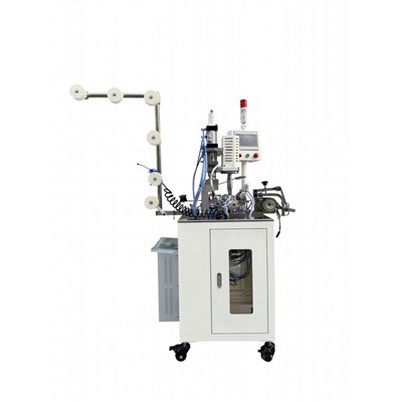
Operating Techniques for Nylon Zipper Machines: Key Strategies for Improving Quality and Efficiency
Leave a message
As a core piece of equipment for the precision molding of polymer materials, the stable operation and high-quality output of nylon zipper machines depend not only on the performance of the equipment itself but also on the skillful application of operating and process control techniques. Through long-term practice, the industry has summarized a series of targeted techniques that can significantly improve production efficiency in areas such as material adaptation, parameter setting, process connection, and quality control, providing a reliable guarantee for large-scale manufacturing.
Regarding material input and preheating control, the key technique lies in conducting small-scale tests based on the melt index and batch differences of the polyamide chips to determine the optimal extrusion temperature range. In actual operation, a gradual heating method should be adopted to avoid material degradation or a sudden drop in viscosity due to a single high-temperature shock, which would affect the fullness of the zipper teeth. During the preheating stage, attention should also be paid to the temperature balance of the barrel and die head. Multi-point temperature measurement and fine-tuning of heating power should be used to eliminate local temperature differences, thereby ensuring the consistency of the extruded filament cross-section and the stability of mechanical properties.
The coordination techniques for the molding and insertion processes particularly emphasize the coordinated control of tension and pressure. During chain tooth forming, the uniform temperature distribution of the mold determines the symmetry and resilience of the teeth. It is recommended to preheat the machine by idling and check the temperature field of the mold surface before startup, supplementing with localized heat preservation or air cooling if necessary. During the insertion process, the pushing speed must be matched with the pressing pressure: too high a speed can easily cause the fabric to stretch and deform, while insufficient pressure will result in weak chain tooth engagement. A proven practice is to first test run at a low speed during production changes, observe the chain tooth engagement, and then gradually increase to the rated speed, establishing a safe parameter ramp-up curve.
In multi-specification switching and flexible production, techniques for rapid mold changeover and parameter recall can significantly reduce downtime. Pre-determining the mold assembly/disassembly sequence and positioning benchmarks, along with standardized torque tightening procedures, can reduce human error. Simultaneously, saving commonly used specification process parameters as templates allows for one-click loading and fine-tuning based on actual conditions, avoiding quality fluctuations caused by repeated trial and error. For orders requiring subsequent dyeing or surface treatment, the process sequence should be rationally arranged, placing heat-sensitive decorative processes after molding and insertion for independent completion to protect the integrity of the color and functional layers.
Quality control techniques emphasize the use of online monitoring and real-time feedback. By deploying visual inspection, tensile testing, and tension resistance monitoring devices at key workstations, deviations in zipper tooth dimensions or abnormal engagement can be detected in real time. The control system automatically corrects temperature, pressure, or speed parameters, forming a closed-loop control. This technique not only reduces the burden of manual spot checks but also intercepts potential defects in mass production, improving the overall yield rate.
Regarding equipment maintenance, preventative maintenance and critical point inspections are crucial for extending stable operating time. Regularly checking the accuracy of the temperature control module, the clearance of transmission components, and lubrication can eliminate minor anomalies before they develop into malfunctions. Establishing usage cycle records and spare parts for vulnerable components ensures rapid replacement in case of emergencies, minimizing unplanned downtime.
In summary, the operating techniques for nylon zipper machines cover all process essentials from material pretreatment to finished product inspection, emphasizing precise parameter control, process optimization, and closed-loop data management. Mastering and flexibly applying these techniques can significantly improve product quality and production efficiency, and enhance a company's adaptability and competitiveness in a changing market environment.