Upgrading Precision Manufacturing Equipment Helps Improve The Quality And Efficiency Of The High-End Zipper Industry
Leave a message
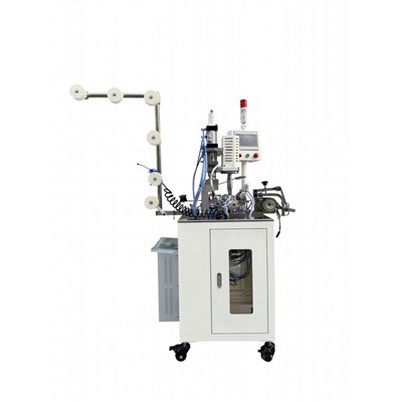
Driven by both consumption upgrades and high-quality development of the manufacturing industry, the high-end zipper industry is placing higher demands on the precision, stability, and intelligence of its production equipment. As a core component of zipper manufacturing, the technological iteration of precision molding equipment not only affects product quality but also directly impacts a company's market competitiveness and sustainable development capabilities. Currently, specialized equipment, represented by resin zipper machines and invisible zipper machines, is advancing towards high precision, intelligence, and green manufacturing through technological innovation, providing crucial support for industry upgrading.
The production challenge of high-end zippers lies in the pursuit of ultimate detail. Taking invisible zippers as an example, the zipper teeth must be completely hidden inside the fabric tape, and the surface must be smooth and free of protrusions after sewing. This places stringent standards on the equipment's fabric feeding and positioning accuracy, tooth implantation pressure control, and stitch uniformity. Traditional equipment, due to large mechanical transmission errors and low temperature control accuracy, is prone to problems such as exposed zipper teeth and fabric wrinkles, making it difficult to meet the needs of high-end apparel and luxury bags. Against this backdrop, the new generation of precision zipper machines, by integrating servo drive, closed-loop control, and online monitoring technologies, controls fabric feeding and positioning errors to the micron level, implant depth fluctuations to no more than ±0.03mm, and stitch spacing deviations to less than 0.05mm, significantly improving product consistency and concealment.
Intelligent upgrading is another core direction of equipment iteration. Modern zipper machines are generally equipped with PLC control systems and industrial IoT interfaces, enabling process parameter storage, remote monitoring, and data analysis. Some equipment incorporates machine vision inspection technology, which can identify zipper tooth implantation deviations or sewing defects in real time and automatically adjust parameters such as pressure and temperature through adaptive algorithms, reducing scrap rates by more than 30%. Simultaneously, flexible design supports rapid switching between multiple varieties and small batches, reducing changeover time from over one hour to within 15 minutes, effectively meeting the fast fashion industry's demand for small-batch, rapid-response production.
The deepening of the green manufacturing concept also drives equipment technology innovation. New equipment reduces production energy consumption and carbon emissions by optimizing the energy efficiency ratio of the heating system, adopting low-power servo motors, and using recyclable materials. For example, a certain type of resin zipper machine, through zoned temperature control and waste heat recovery technology, reduces energy consumption by 25% compared to traditional models and reduces the risk of resin degradation, balancing efficiency and environmental protection.
The upgrade of precision manufacturing equipment not only solves the "bottleneck" problem in high-end zipper production but also propels the industry to climb towards the high end of the value chain. In the future, with the deep application of artificial intelligence and digital twin technologies, zipper equipment will further achieve self-sensing, self-decision-making, and self-optimization, injecting stronger momentum into the high-quality development of the industry.