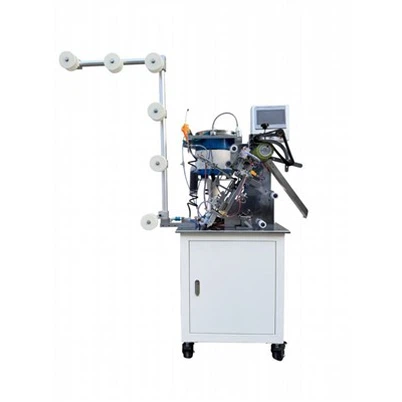
The Intricacies Of Precision Weaving Industry: A Core Analysis Of Metal Zipper Machines
Leave a message
In the textile and bag manufacturing industry, metal zippers, as a pivotal component connecting function and aesthetics, directly impact the durability and texture of the final product due to their manufacturing precision. The metal zipper machine is the core carrier of this precision manufacturing process, using mechanical force to transform metal wire into industrial works of art that combine strength and smoothness.
The essence of a metal zipper machine is an automated system integrating multiple processes. Its core logic revolves around the entire process of "metal wire-forming-engaging-quality inspection." First, the equipment uses a high-precision feeding mechanism to uniformly transport metal wire of specific specifications to the forming module, where it is stamped and cut to form standardized zipper tooth blanks. Then, the zipper teeth are precisely embedded into the pre-set tracks of the fabric tape, achieving a firm bond with the base material through hot pressing or cold riveting. Finally, the zipper head assembly unit completes a closure test with millimeter-level positioning accuracy, ensuring that the pulling resistance and engagement tightness of each zipper meet industry standards.
Compared to traditional manual or semi-mechanized production, modern metal zipper machines offer significant advantages in both consistency and efficiency. Firstly, the deep application of CNC technology ensures that the zipper tooth size error is controlled within ±0.02mm, completely resolving issues such as tooth misalignment and uneven spacing that easily occur in manual operation, thus greatly improving the finished product qualification rate. Secondly, high-speed operation (some models can produce over 10,000 standard zippers per hour) significantly shortens the production cycle, meeting the bulk order demands of industries such as apparel and outdoor equipment. Thirdly, modular design supports rapid switching between different specifications and parameters, easily adapting to the production of mainstream models such as #3, #5, and #8, as well as customized irregular-shaped zippers, expanding the boundaries of application scenarios.
It is worth noting that with the deepening of the green manufacturing concept, the new generation of metal zipper machines is iterating towards low energy consumption and low noise. By optimizing the transmission structure and adopting energy-saving motors, the equipment's energy consumption is reduced by approximately 30% compared to ten years ago; at the same time, the application of enclosed protective design and vibration reduction technology controls operating noise below 75 decibels, improving the workshop environment.
From everyday clothing to aerospace equipment, the reliability of metal zippers is underpinned by the precision of metal zipper machines, a hallmark of industrial excellence. As an "invisible yet crucial" link in the industrial chain, their technological evolution continuously drives quality upgrades in downstream manufacturing and injects new momentum into the intelligent transformation of the traditional textile machinery sector.