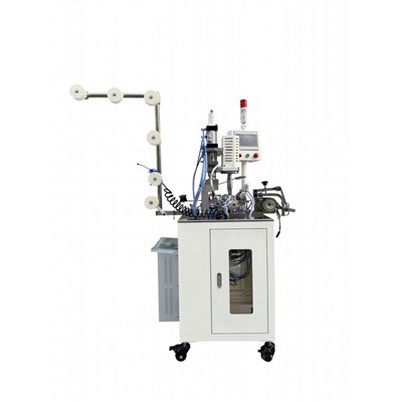
The Applicable Environment Of Nylon Zipper Machines: Matching Process Requirements And Industrial Scenarios
Leave a message
As core equipment for the precision molding of polyamide materials, the applicable environment for nylon zipper machines is not broad and unlimited. It is defined by the material processing characteristics, process stability requirements, and industrial scenario conditions. Clearly defining the applicable environment helps companies mitigate risks in equipment selection and production layout, ensuring efficient and stable manufacturing output.
From a temperature and humidity perspective, nylon zipper machines have specific requirements for the environmental parameters of the production workshop. Polyamide chips are hygroscopic; if the ambient humidity is too high, insufficient drying of the raw material before extrusion will introduce defects such as bubbles and silver streaks, affecting the mechanical properties of the zipper teeth. Therefore, the workshop needs to be equipped with a constant temperature and humidity system, with relative humidity ideally controlled below 60% and the temperature maintained within a stable range of 20℃–28℃ to ensure the efficiency of the raw material drying equipment and the thermal stability of the extrusion unit. While the equipment's own temperature control system can compensate for some environmental fluctuations, extreme temperature and humidity changes will still increase the temperature control load and reduce process repeatability.
In terms of space and layout, nylon zipper machines, due to their integration of multiple processes such as extrusion, molding, insertion, and sewing, are typically long and narrow or L-shaped, requiring sufficient space for operation and maintenance. A passageway of at least 1 meter should be maintained around the equipment to facilitate material handling, mold replacement, and personnel inspection. For multiple machines operating in a production line, a reasonable logistics path must be planned to prevent the fabric tape and zipper blanks from being squeezed or scratched during transit. Furthermore, vibration and noise during equipment operation must be controlled through foundation vibration isolation and sound insulation measures to avoid interference with adjacent processes or office areas.
A stable power and gas supply environment is fundamental to the stable operation of the equipment. The extrusion unit, servo drive, and control system require high power supply stability and must be connected to a three-phase five-wire industrial power grid. Voltage fluctuations should ideally be controlled within ±5%, and a voltage stabilizer should be installed if necessary. Pneumatic systems (such as pushing, pressing, and sorting mechanisms) require clean, dry compressed air with a stable pressure between 0.5MPa and 0.7MPa, and should be equipped with an oil-water separator to prevent moisture and impurities from entering the cylinders or solenoid valves, affecting operational accuracy and lifespan.
Cleanliness and environmental protection are equally critical. While nylon zipper production does not have the same cleanliness requirements as industries like semiconductors, it is still essential to prevent dust, oil, and other contaminants from contacting raw materials and work-in-process. Workshop floors should be made of non-slip, dust-proof materials and cleaned regularly. Protective covers should be installed on critical equipment components (such as extrusion dies, forming molds, and vision inspection lenses) to prevent foreign object intrusion or accidental contact by operators, which could lead to equipment malfunctions or quality abnormalities.
Furthermore, from an industry scenario adaptation perspective, nylon zipper machines are suitable for large-scale textile and garment factories as well as workshops specializing in customized cultural and creative products or outdoor equipment. The former emphasizes the equipment's high-speed continuous operation capability and batch production efficiency, while the latter focuses more on flexible adjustment range and ease of small-batch production. In specialized fields (such as medical protective equipment and aerospace interiors), the workshop must also meet corresponding hygiene certifications or cleanliness level requirements, necessitating additional specialized designs such as antibacterial coatings and dust-free assembly.
In summary, the applicable environment for nylon zipper machines is a comprehensive system comprised of temperature and humidity, spatial layout, energy supply, cleanliness protection, and the specific industrial context. Only when operating in a suitable environment can the equipment fully leverage its material adaptability, process stability, and flexible production capabilities, providing reliable support for the high-quality manufacturing of nylon zippers.