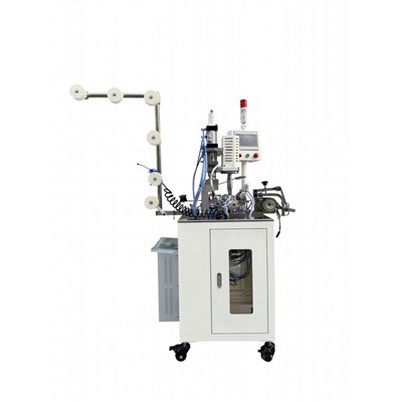
Precautions For Operating Resin Zipper Machines: Key Points For Ensuring Safe Production And Stable Operation
Leave a message
Resin zipper machines perform multiple tasks in the zipper manufacturing process, including high-temperature melting, precision molding, and continuous conveying.Their complex structure and strict process parameter requirements mean that improper operation can not only affect product quality but also lead to equipment malfunctions or even safety accidents. To ensure continuous production and personnel safety, a series of key precautions must be followed throughout the entire production cycle.
First, a comprehensive inspection should be conducted before starting the machine. Confirm that the power supply voltage and air pressure are within the equipment's rated range to avoid instability due to abnormal energy sources; check that the oil or grease levels at each lubrication point are sufficient and free from leaks; verify the mold installation position and the preheating status of the heating system to ensure that the mold temperature is uniform and reaches the process set value, preventing tooth filling defects caused by cold mold startup. Simultaneously, all safety protection devices and emergency stop buttons must be fully functional and must not be arbitrarily short-circuited or disabled.
During operation, strict adherence to process regulations is essential. Operators must set and lock key parameters such as temperature, pressure, and traction speed according to the resin type and product specifications, avoiding unauthorized changes. Closely monitor equipment vibration, noise, and temperature rise; if any abnormal sounds or sudden temperature increases are detected, immediately stop the machine for inspection to prevent further malfunctions caused by bearing wear or loose drive belts. The melt is viscous at high temperatures and poses a risk of splashing; it is strictly forbidden to place hands or tools near the discharge port or mold area while the equipment is running.
Material supply must be continuous and pure. Resin granules should be free of foreign matter and moisture-induced caking. The hopper should not be overfilled to prevent bridging or uneven melting. When changing raw material batches, thoroughly empty the remaining material from the barrel and perform a short-term evacuation run to avoid molding instability caused by differences in the properties of different resin grades.
Shutdown procedures must also be standardized. First, stop feeding and allow the equipment to idle for a certain period to deplete as much material as possible from the barrel and pipes. Then, shut down the heating and power systems according to procedures. Cleaning and maintenance can only be performed after the mold temperature has dropped to a safe range to prevent burns from high temperatures. Specialized soft tools should be used to clean the surfaces of the mold and pressing rollers. Avoid using sharp metal tools to scrape, as this may damage the surface finish of the cavity.
Regarding personnel management, regular training on operating procedures and emergency response is necessary to ensure that every operator is familiar with the equipment's performance and potential risks. Strict adherence to shift handover records and inspection procedures is also crucial. By implementing these precautions, the failure rate can be effectively reduced, equipment lifespan extended, and a reliable guarantee for the high-quality production of resin zippers can be provided.