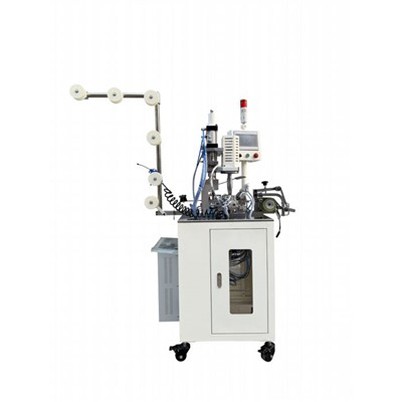
Industry Trends in Invisible Zipper Machines: Moving Towards High Precision, Intelligent Manufacturing, and Green Manufacturing
Leave a message
As the global textile, apparel, bag, leather goods, and home furnishing industries continuously pursue quality upgrades and differentiated competition, invisible zippers, with their unique advantage of being completely hidden inside the fabric tape, are seeing a sustained increase in their application in the high-end market. As the core equipment for invisible zipper production, invisible zipper machines are undergoing a new round of technological iteration and market restructuring, with the industry exhibiting four major trends: high precision, intelligent manufacturing, flexibility, and green manufacturing.
First, high-precision manufacturing has become a mandatory requirement. Consumers have increasingly stringent demands for the exquisite appearance of clothing and leather goods. Invisible zippers not only need to ensure the concealment of the zipper teeth but also maintain a smooth fabric surface and clean lines after sewing. This drives equipment manufacturers to continuously optimize fabric feeding positioning, tooth implantation pressure, and sewing synchronization accuracy, introducing higher-resolution servo drives and closed-loop control systems to control the error in tooth spacing and implantation depth to the micron level, thereby meeting the stringent standards of high-end brands for product consistency.
Second, deep integration of intelligent and digital technologies. Modern concealed zipper machines are increasingly equipped with PLC control platforms, touchscreen human-machine interfaces, and industrial IoT interfaces, enabling process parameter storage, remote monitoring, and data analysis. Some machines already possess online visual inspection and automatic compensation functions, capable of identifying zipper tooth insertion deviations or sewing defects in real time and automatically correcting them, significantly reducing manual intervention and scrap rates. In the future, with the introduction of artificial intelligence algorithms, the equipment will have self-learning optimization capabilities, automatically matching the optimal process curve according to different materials and order requirements, further improving production efficiency and flexible response capabilities.
Third, flexible production adapts to diverse needs. The market demand for small-batch, multi-variety, and customized products is growing rapidly, requiring concealed zipper machines to quickly switch between different specifications, materials, and fabric strips. New equipment, through modular design, enables rapid replacement and parameter recall of the feeding mechanism, pressing head, and sewing unit, and automatically loads the corresponding process programs with an intelligent recognition system, shortening changeover time and enhancing the competitiveness of enterprises in the fast fashion and personalized customization fields.
Finally, the concept of green manufacturing leads to sustainable development. Driven by energy conservation and emission reduction policies and environmental regulations, equipment manufacturers are paying more attention to energy efficiency and material friendliness. This includes adopting efficient heating and cooling systems to reduce energy waste, optimizing transmission structures to lower operating noise and mechanical wear, and promoting recyclable or low-VOC-emission auxiliary materials. This not only helps companies reduce operating costs but also aligns with the global supply chain's requirements for a low carbon footprint, enhancing brand recognition in the international market.
Overall, the invisible zipper machine industry is evolving from traditional machining towards high precision, intelligence, flexibility, and green technology. Companies need to keep up with technological trends and increase R&D investment and talent development to gain an advantage in increasingly fierce market competition and provide higher-quality equipment support to downstream industries.