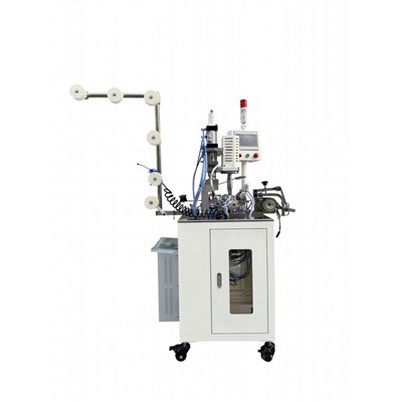
What is the speed adjustment method of a nylon zipper machine?
Leave a message

A nylon zipper machine is a highly specialized piece of equipment crucial in the production of nylon zippers, which are widely used in various industries, such as clothing, luggage, and outdoor gear. The ability to adjust the speed of a nylon zipper machine is essential for optimizing production efficiency, ensuring product quality, and adapting to different production requirements. As a leading nylon zipper machine supplier, we understand the significance of speed adjustment methods and are committed to providing our customers with the most effective solutions.
Mechanical Speed Adjustment
One of the traditional methods of adjusting the speed of a nylon zipper machine is through mechanical means. This method typically involves the use of gears, pulleys, and belts. By changing the gear ratio, the operator can effectively alter the speed of the machine. For example, using a larger gear on the motor side and a smaller gear on the driven shaft can increase the speed, while the opposite setup can decrease it.
Pulleys and belts play a similar role in mechanical speed adjustment. A variable - speed pulley system allows the operator to change the effective diameter of the pulleys, thereby adjusting the speed of the machine. This method is relatively simple and reliable, and it has been used in industrial machinery for a long time. However, it also has some limitations. Mechanical speed adjustment usually requires manual intervention, which can be time - consuming and may not be suitable for rapid adjustments. Additionally, the number of available speed settings is often limited by the design of the gear and pulley system.
Electrical Speed Adjustment
In modern nylon zipper machines, electrical speed adjustment methods are becoming increasingly popular. One of the most common electrical speed adjustment techniques is the use of a variable frequency drive (VFD). A VFD works by changing the frequency and voltage of the electrical power supplied to the motor, which in turn changes the motor's speed. This method offers several advantages over mechanical speed adjustment.
First of all, it provides a wide range of speed control. The operator can adjust the speed of the machine continuously within a certain range, which is particularly useful for fine - tuning the production process. For example, when producing different types of nylon zippers, the required production speed may vary. With a VFD, the operator can easily adjust the speed to meet the specific requirements of each product.
Secondly, VFDs offer high precision in speed control. They can maintain a stable speed even under varying loads, ensuring consistent product quality. In addition, VFDs are energy - efficient. By adjusting the motor speed according to the actual load, they can reduce energy consumption, which is beneficial for both the environment and the cost - effectiveness of the production.
Another electrical speed adjustment method is the use of a servo motor system. Servo motors are known for their high - precision control and fast response. They can accurately follow the speed commands sent by the control system. This makes them suitable for applications where high - speed and high - precision production is required. For instance, in the production of high - quality nylon zippers with complex patterns, a servo motor system can ensure that the machine operates at the optimal speed to produce accurate and consistent results.
Programmable Logic Controller (PLC) - Based Speed Adjustment
A Programmable Logic Controller (PLC) is a digital computer used for automation of industrial processes, including the speed adjustment of nylon zipper machines. A PLC - based speed adjustment system allows for more complex and flexible speed control.
The operator can program the PLC to change the speed of the machine according to a pre - set sequence. For example, during the start - up phase, the machine can start at a slow speed to ensure a smooth start, and then gradually increase the speed to the normal production speed. During the production process, the PLC can also adjust the speed based on the feedback from various sensors, such as the tension sensor and the length sensor.
If the tension of the nylon tape exceeds a certain limit, the PLC can automatically reduce the speed of the machine to prevent the tape from breaking. This kind of intelligent control not only improves the production efficiency but also reduces the probability of equipment failure and product defects.
Importance of Choosing the Right Speed Adjustment Method
Selecting the appropriate speed adjustment method for a nylon zipper machine is of great significance for the overall production process. The wrong method can lead to various problems. If the speed adjustment method lacks precision, the machine may run at an unstable speed, resulting in unevenly made zippers, which can affect the quality of the final product.
On the other hand, an inefficient speed adjustment method can slow down the production process, reducing the overall production capacity. As a nylon zipper machine supplier, we recommend that our customers choose the speed adjustment method based on their specific production needs. For small - scale production with relatively simple requirements, mechanical speed adjustment may be sufficient. However, for large - scale production or high - precision production, electrical or PLC - based speed adjustment methods are more suitable.
Related Machines and Their Role in Production
In addition to the basic speed adjustment of nylon zipper machines, it is also important to mention some related machines in the zipper production line. The Nylon Zipper Bottom Stop Machine is used to install the bottom stops on the nylon zippers. By adjusting the speed of this machine in sync with the main zipper machine, the overall production efficiency can be optimized.
The Nylon Zipper Slider Fixing Machine is responsible for attaching the sliders to the nylon zippers. Precise speed adjustment of this machine can ensure that the sliders are accurately and firmly fixed on the zippers. Similarly, the Nylon Zipper Gapping Machine is used to create the appropriate gap between the zipper teeth. The speed of this machine needs to be adjusted properly to achieve the desired gapping effect.
Contact Us for Your Nylon Zipper Machine Needs
As a professional nylon zipper machine supplier, we have a wealth of experience in providing high - quality machines with various speed adjustment methods. Whether you are a small workshop or a large - scale manufacturing enterprise, we can offer you the most suitable solutions for your nylon zipper production.
If you are interested in our products or have any questions about the speed adjustment methods of nylon zipper machines, we encourage you to contact us. Our team of experts is always ready to assist you in choosing the right machines and setting up an efficient production line. We believe that with our advanced technology and excellent service, we can help you achieve your production goals and enhance your competitiveness in the market.


References
- Smith, J. (2018). Industrial Machinery Speed Control Methods. Machinery Publishing.
- Johnson, R. (2019). Advances in Nylon Zipper Manufacturing Technology. Textile Industry Journal.
- Brown, T. (2020). PLC Programming for Industrial Automation. Automation Press.