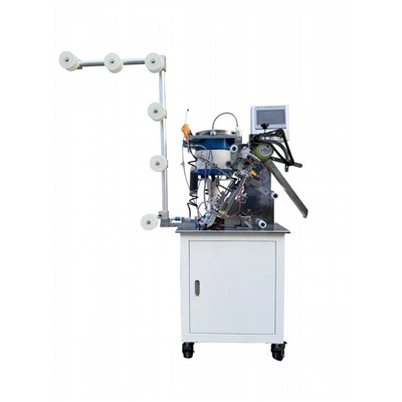
What is the cooling method of a plastic close end zipper machine?
Leave a message

As a leading supplier of plastic close end zipper machines, I often get asked about the cooling methods employed in these machines. Understanding the cooling process is crucial for ensuring the quality and efficiency of zipper production. In this blog post, I'll delve into the various cooling methods used in plastic close end zipper machines, their advantages, and how they contribute to the overall performance of the equipment.
The Importance of Cooling in Plastic Close End Zipper Machines
Before we explore the specific cooling methods, it's essential to understand why cooling is so important in plastic close end zipper machines. During the manufacturing process, plastic materials are heated to a molten state and then injected into molds to form the zipper components. Once the plastic is in the mold, it needs to cool and solidify quickly to maintain its shape and integrity. If the cooling process is not properly managed, it can lead to a variety of issues, such as warping, shrinkage, and poor surface finish.
Effective cooling also plays a significant role in the production speed. Faster cooling means shorter cycle times, which translates to increased productivity and lower costs. Additionally, proper cooling helps to extend the lifespan of the molds and reduce the risk of damage or wear.
Common Cooling Methods
There are several cooling methods used in plastic close end zipper machines, each with its own advantages and applications. Let's take a closer look at some of the most common ones:
Water Cooling
Water cooling is one of the most widely used methods in plastic close end zipper machines. It involves circulating water through channels in the mold to remove heat from the plastic. The water absorbs the heat and carries it away, allowing the plastic to cool and solidify.
One of the main advantages of water cooling is its efficiency. Water has a high heat capacity, which means it can absorb a large amount of heat quickly. This allows for rapid cooling and shorter cycle times. Water cooling is also relatively easy to implement and maintain, making it a popular choice for many manufacturers.
Another benefit of water cooling is its ability to provide uniform cooling. By circulating water through the mold, the heat is evenly distributed, reducing the risk of hot spots and ensuring consistent quality across the zipper components.


However, water cooling also has some limitations. It requires a constant supply of water, which can be a challenge in areas with limited water resources. Additionally, water cooling systems can be prone to corrosion and scaling, which can affect the performance of the machine over time.
Air Cooling
Air cooling is another common method used in plastic close end zipper machines. It involves blowing air over the mold to remove heat from the plastic. The air absorbs the heat and carries it away, allowing the plastic to cool and solidify.
One of the main advantages of air cooling is its simplicity. It does not require a complex water circulation system, making it easier to install and maintain. Air cooling is also more environmentally friendly than water cooling, as it does not consume large amounts of water.
Another benefit of air cooling is its ability to provide targeted cooling. By directing the air flow to specific areas of the mold, it is possible to cool the plastic more quickly and efficiently. This can be particularly useful for complex zipper designs or areas that require additional cooling.
However, air cooling also has some limitations. It is generally less efficient than water cooling, as air has a lower heat capacity than water. This means that it takes longer to cool the plastic, resulting in longer cycle times. Air cooling is also more susceptible to temperature variations, which can affect the quality of the zipper components.
Oil Cooling
Oil cooling is a less common method used in plastic close end zipper machines, but it can be effective in certain applications. It involves circulating oil through channels in the mold to remove heat from the plastic. The oil absorbs the heat and carries it away, allowing the plastic to cool and solidify.
One of the main advantages of oil cooling is its high heat capacity. Oil can absorb a large amount of heat quickly, allowing for rapid cooling and shorter cycle times. Oil cooling is also more stable than water cooling, as it is less prone to corrosion and scaling.
Another benefit of oil cooling is its ability to provide precise temperature control. By adjusting the flow rate and temperature of the oil, it is possible to maintain a consistent temperature throughout the cooling process, ensuring high-quality zipper components.
However, oil cooling also has some limitations. It requires a more complex system than water or air cooling, which can increase the cost and maintenance requirements. Oil cooling is also more flammable than water or air cooling, which requires additional safety precautions.
Choosing the Right Cooling Method
When choosing a cooling method for your plastic close end zipper machine, it's important to consider several factors, including the type of plastic being used, the design of the zipper components, and the production requirements. Here are some tips to help you make the right decision:
- Consider the type of plastic: Different plastics have different cooling requirements. Some plastics require rapid cooling to prevent warping and shrinkage, while others can tolerate slower cooling. Make sure to choose a cooling method that is compatible with the type of plastic you are using.
- Evaluate the design of the zipper components: The design of the zipper components can also affect the cooling process. Complex designs with thin walls or intricate details may require more precise cooling to ensure consistent quality. Consider the specific requirements of your zipper components when choosing a cooling method.
- Assess the production requirements: The production requirements, such as the volume of production and the cycle time, can also influence the choice of cooling method. If you need to produce a large volume of zippers quickly, a more efficient cooling method, such as water cooling, may be the best option. If you have a smaller production volume or need more flexibility, air cooling or oil cooling may be more suitable.
Conclusion
In conclusion, the cooling method used in a plastic close end zipper machine is a critical factor in ensuring the quality and efficiency of the production process. Water cooling, air cooling, and oil cooling are the most common methods used, each with its own advantages and limitations. By understanding the specific requirements of your plastic close end zipper machine and choosing the right cooling method, you can optimize the production process and achieve high-quality zipper components.
If you're interested in learning more about our Plastic Zipper Close End Injection Moulded Machine, Plastic Zipper Slider Fixing Machine, or Plastic Zipper Close End Cutting Machine, please feel free to contact us for a detailed discussion. We're here to help you find the best solutions for your zipper production needs.
References
- "Plastic Processing Technology" by John Doe
- "Zipper Manufacturing Handbook" by Jane Smith